
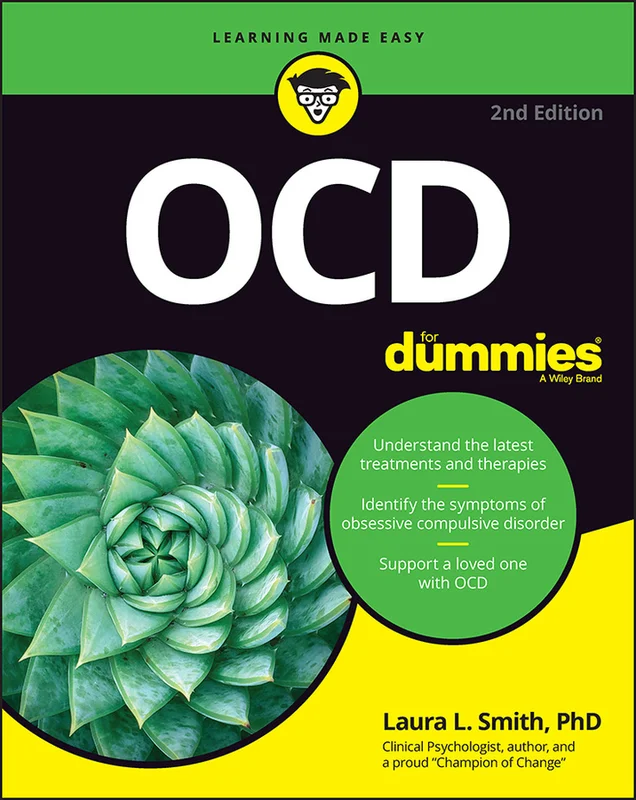
Description
By (author) Smith, Laura L.
:
Manage OCD and live a better life, thanks to this friendly Dummies guide
People with obsessive-compulsive disorder (OCD) need skills and tools to manage their symptoms. OCD For Dummies offers help for you or your loved one when it comes to recognizing, diagnosing, treating, and living with this common mental and behavioral disorder. Dummies gives you all the information you need on getting your symptoms under control and working toward remission. This edition updates you with the latest research on OCD, new therapeutic treatments, and all the most up-to-date resources to help you along on your OCD journey. You’re not alone—there are millions of people out there who understand what you’re going through, and OCD For Dummies does, too. Understand obsessive-compulsive disorder and get the help you need with this book.
- Discover what causes OCD and learn how identify the symptoms and early warning signs
- Learn about the latest medications, treatments, and resources available to help manage OCD symptoms
- Differentiate between OCD and related disorders so you can get the right help
- Help a loved one who suffers from OCD and get tips on how you can be supportive
If you or someone you know has symptoms of OCD or has received a recent diagnosis, this book will gently guide you through building the skills and awareness that will let you live life to its fullest.
Table of contents:
Introduction 1
About This Book 2
Foolish Assumptions 2
Icons Used in This Book 3
Beyond the Book 3
Where to Go from Here 3
Part 1: The Ins and Outs of Ocd 5
Chapter 1: Facing Obsessive-Compulsive Disorder (OCD) 7
What Is OCD? 8
Suffering shame 9
Wrestling with risk 9
Dealing with doubt 10
Counting the Costs of OCD 10
OCD and the Media 11
Pandemic panic 11
Disgusting filth 12
Exploring Treatment Options for OCD 13
Changing the way you think with CBT 14
Thinking about thinking: Metacognitive therapy 14
Approaching OCD mindfully 15
Modifying behavior through ERP 15
Controlling OCD with medications 16
Sending signals deep into the brain 17
Helping People with OCD 17
Chapter 2: Understanding What OCD Is All About 19
Seeing the Two Sides of OCD 20
Obsessing about obsessions 20
Considering compulsions 22
Coming to Terms with OCD 24
The OCD worry cycle 24
Thinking and believing 26
Inspecting impulses 27
Categorizing the Types of OCD 28
Doubts, fears, and uncertainties 29
Contamination, germs, and dirt 30
Shame, embarrassment, and inappropriate thoughts and behaviors 31
Superstitions and rituals 34
Symmetry and perfectionism 34
Parenting OCD 35
Obsessive feelings and sensations 36
Separating OCD from Normal Worries 38
OCD and Diversity 39
Getting to a Diagnosis of OCD 40
Avoiding self-diagnosis 41
Avoiding misdiagnosis 41
Chapter 3: Meeting The Associates and Relatives of OCD 43
Recognizing the Guests or Associates of OCD 44
When anxiety and OCD hang out together 44
Moods and OCD 45
Meeting the Close Relatives of OCD 45
Body dysmorphic disorder (BDD): A seriously distorted self-image 46
Hoarding disorder 47
Trichotillomania: Pulling your hair out 49
Skin-picking: Excoriation disorder 50
Distant Cousins of OCD 51
Obsessive-compulsive personality disorder 51
Smelling bad: Olfactory reference disorder 52
Tics and Tourette’s syndrome: Involuntary sounds and movements 53
Somatic symptom disorder: I think I’m really sick 55
Eating disorders: Intense fear of fat 56
<




Reviews
There are no reviews yet.