
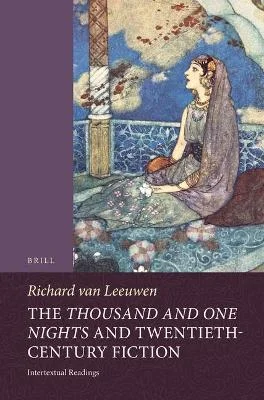
Description
By (author) Leeuwen, Richard van
:
It is gradually being acknowledged that the Arabic story-collection Thousand and One Nights has had a major influence on European and world literature. This study analyses the influence of Thousand and One Nights, as an intertextual model, on 20th-century prose from all over the world. Works of approximately forty authors are examined: those who were crucial to the development of the main currents in 20th-century fiction, such as modernism, magical realism and post-modernism. The book contains six thematic sections divided into chapters discussing two or three authors/works, each from a narratological perspective and supplemented by references to the cultural and literary context. It is shown howThousand and One Nights became deeply rooted in modern world literature especially in phases of renewal and experiment.
Table of contents:
AcknowledgmentsIntroduction The Thousand and One Nights Incorporation into World Literature This StudyPart 1 Enclosures, Journeys, and Texts1 Enclosures, Letters, and Destiny: Hugo von Hofmannsthal and André Gide Hugo von Hofmannsthal, the Kunstmärchen, and Orientalism The Contingency of Fate: André Gide’s Les faux-monnayeurs2 Going Home: Al-Tayyib Salih and Ibrahim al-Faqih Season of Migration to the North and the Thousand and One Nights The Forbidden Room: The Thousand and One Nights and Ibrahim al-Faqih’s Gardens of the Night3Writing and Enclosures: Michel Butor and Abilio Estévez The Portrait of an Author: Michel Butor’s Portrait de l’artiste comme jeune singe Imprisoned Imagination: Abilio Estévez Conclusions to Part 1Part 2 Capturing the Volatility of Time4 The Return of Time: Marcel Proust and Ahmet Hamdi Tanpınar Proust and the Thousand and One Nights Times of Life and Society: Ahmet Hamdi Tanpınar5 Narration and Survival: Vladimir Nabokov and Margaret Atwood Nabokov, the Thousand and One Nights, and Life After Death Narrating Against Death: Margaret Atwood6 Desire Unbound: The Marquis de Sade and Angela Carter Angela Carter: The Feminist-Narrative Complex7 Temporal Dystopias: Botho Strauss and Haruki Murakami War and the Re-invention of Time: Botho Strauss’s Der junge Mann Haruki Murakami and the Constraints of Time Conclusions to Part 2Part 3 The Textual Universe8 The Celebration of Textuality: James Joyce and the Argentine (post-)Modernists The Thousand and One Nights and the Textuality of Ulysses and Finnegans Wake Textual Worlds: Fernández, Arlt, Borges, and Piglia9 Stories Without End: Italo Calvino and Georges Perec Italo Calvino and Narration: If on a Winter’s Night a Traveller … and the Thousand and One Nights Georges Perec: The Imperative of Form10 The Celebration of Hybridity: Abdelkébir Khatibi and Juan Goytisolo Abdelkébir Khatibi: Narration and the Body Juan Goytisolo: Hybridity as a Refuge Conclusions to Part 3Part 4 Narrating History11 The Traumas of History: William Faulkner, Toni Morrison, and André Brink Form History Absalom, Absalom! and the Thousand and One Nights The Haunted House: Toni Morrison’s Beloved and André Brink’s Imaginings of Sand12 The Enchantment of History: Gabriel García Márquez andSalman Rushdie Gabriel García Márquez and One Hundred Years of Solitude Salman Rushdie: History Gone Awry13 Words Against Death: Roberto Calasso, David Grossman, andElias Khoury Roberto Calasso: The Ruin of Kasch David Grossman: Fighting the Nazi Beast Violence and the Boundaries of Narrativity: Elias Khoury’s Yalo Conclusions to Part 4Part 5 Identifications, Impersonations, Doubles: The Discontents of (post-)Modernity14 Aladdin’s Nightmare: Henrik Pontoppidan and Ernst Jünger The Curse of Aladdin: Henrik Pontoppidan The City of Brass, Aladdin, and the Discontents of Modernity: Ernst Jünger15 The Sindbad Syndrome: Gyula Krúdy and John Barth Gyula Krúdy: The Nostalgic Nomad The Intrepid Travele


Reviews
There are no reviews yet.