
Description
By (author) Yücesoy, Hayrettin
Short /annotation:
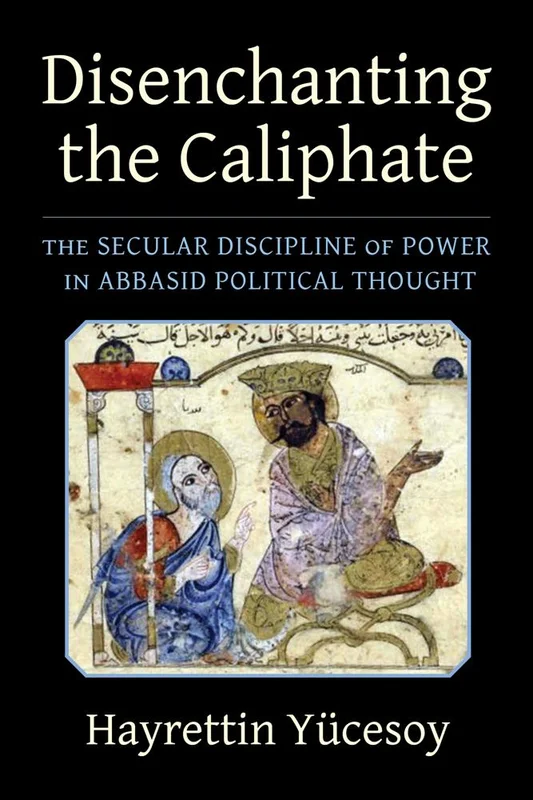
Hayrettin Yücesoy offers a groundbreaking new account of political discourse in Islamic history by examining Abbasid imperial practice, illuminating the emergence and influence of a vibrant secular tradition.
:
The political thought of Muslim societies is all too often defined in religious terms, in which the writings of clerics are seen as representative and ideas about governance are treated as an extension of commentary on sacred texts. Disenchanting the Caliphate offers a groundbreaking new account of political discourse in Islamic history by examining Abbasid imperial practice, illuminating the emergence and influence of a vibrant secular tradition.
Closely reading key eighth-century texts, Hayrettin Yücesoy argues that the ulema’s discourse of religious governance and the political thought of lay intellectuals diverged during this foundational period, with enduring consequences. He traces how notions of good governance and reflections on prudent statecraft arose among cosmopolitan literati who envisioned governing as an art. Competent in nonreligious branches of knowledge and trained in administrative professions, these belletrists articulated and defended secular political practices, reimagining the caliphal realm as politically constituted rather than natural. They sought to improve administrative efficiency and bolster state control for an empire made up of diverse cultures. Their ideas about moral cultivation, temporal reasoning, and governmental rationality endured for centuries as a counterpoint to religious rulership. Drawing on this history, Yücesoy critiques the concept of “Islamic political thought,” calling for decolonizing debates about “secular” and “religious” politics.
Theoretically rich and historically grounded, Disenchanting the Caliphate is an insightful and provocative reconsideration of key strands of political discourse in the intellectual history of Muslim societies.
Table of contents:
Preface
Acknowledgments
List of Early, Umayyad, and Abbasid Caliphs, 632–861
Introduction: Critical Reflections on “Islamic Political Thought”
1. Caliphal Practice
2. The Language of Imamate
3. Political Prose Revolution
4. The Disruptive Language of Siyasa
5. Deconfessionalizing the Caliph
6. A Theory of Imperial Law
7. Territorial Consciousness
8. Reimagining the People of the Empire
Conclusion: Releasing Siyasa from the Imamate
Conventions and Spelling
Notes
Bibliography
Index
Review quote:
Disenchanting the Caliphate breaks ground for radically new conversations in world history, political theory, empire studies, and Middle Eastern and Global South Studies. At once erudite, astutely conceived, and sparkling with insight, this book is a must read for anyone seeking to de-eurocentrize public and scholarly assumptions about the world”s interconnected past and present.
Review quote:
Gibbon’s flourish about ‘Mahomet, sword in one hand, Koran in the other’ long served as metonym for the diachronic Caliphate. Yücesoy provocatively but convincingly disputes whether ‘Islamic political thought’ was inflexibly Islamic. Αlongside religious scholars he highlights Umayyad and Abbasid bureaucrat-literati, who propounded ethical and managerial principles of governance.
Review quote:
A revision of revisionist scholarship, Yücesoy’s book is theoretically engaged and philologically endowed. It unravels the contentions between what he calls the “secular ethos of adab-siyasa” and “scholastic” political knowledge during the eighth century. This work is a contribution to understanding the early background within which the former was to be absorbed by the latter.
Review quote:
In Disenchanting the Caliphate, Yücesoy




Reviews
There are no reviews yet.