
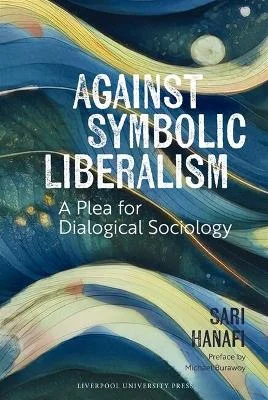
Description
By (author) Hanafi Sari
:
In an era of deepening polarization, Sari Hanafi examines how social scientists often reproduce the very injustices they seek to challenge, taking entrenched positions while dismissing alternative perspectives.
He introduces the concept of symbolic liberalism – a contradiction in which individuals espouse classical liberal principles, yet act in politically illiberal ways. This, he argues, has exacerbated the pathologies of late modernity: authoritarianism, economic precarity, and environmental destruction, now all unfolding in a climate where reasonable debate seems increasingly impossible.
Examining key flashpoints of contemporary polarization, Hanafi critiques how symbolic liberalism inflates the universality of rights while simultaneously narrowing the space for dialogue. Rather than this rigid ideological stance, he calls for a dialogical turn, a renewed public sphere where diverse conceptions of the ‘common good’ engage in genuine conversation.
Blending political and moral philosophy with sociological critique, Hanafi offers a path forward in an age when intellectual exchange is more necessary, yet also more imperilled, than ever. Against Symbolic Liberalism is not just a critique of polarization but a critical and impassioned call to reclaim meaningful intellectual discourse.
Table of contents:
Preface by Michael Buroway
- Introduction
- From Classical Liberalism to Political Liberalism
- Symbolic Liberalism
- The Dialogical Liberal Project
- Societal Polarisation and Academic Freedom
- Secularism as Religion vs. Multicultural Secularism
- Sexual and Gender Diversity: Embracing vs Celebrating
- The Demise of Family Authority: The Case of Swedish Compulsory Child Removal
- Conclusion
Review quote:
Sari Hanafi’s book offers an original analysis and critique of Western sociology, as well as a diagnosis and therapy for polarised societies. The book resembles its author. It is both powerful and generous, global and local, critical and dialogical. The analysis comes straight from Beirut, but will appeal to a larger audience interested in the prospects of sociological theory, post-colonialism, political liberalism and democratic alternatives. – Frédéric Vandenberghe, Federal University of Rio de Janeiro
Review quote:
Hanafi’s brilliant presentation of his Dialogical Political Liberal Project offers a relevant account of how dialogic sociology is the most lucid tool that we have today to provide eloquent analysis and accomplished solutions. Building on a sound theoretical review of liberalism, he has delved into the study of challenging realities in different contexts to resume demonstrating how the sociology that places dialogue at the core of its analyses is able to engage diversity and offer transformative possibilities. Hanafi’s dialogical proposal is an invitation to orient sociology towards improving the lives of citizens, recovering the original purpose for which it was created. – Marta Soler, University of Barcelona and Vice-president for Publications, International Sociological Association
Review quote:
In this powerful and timely book, Sari Hanafi takes on one of liberalism’s deepest flaws: the gap between lofty ideals and concrete realities, between the universal and the particular, theory and praxis. With clarity and conviction, he calls for a radical, self-reflective renewal of liberalism—one that resists the drift toward cynicism and authoritarian compromise. Rejecting tired dichotomies between fact and norm, Hanafi urges an interdisciplinary and dialogical approach rooted in the complexities of our time. This is a bold, rigorous, and essential contribution to the urgent task of aligning l




Reviews
There are no reviews yet.