
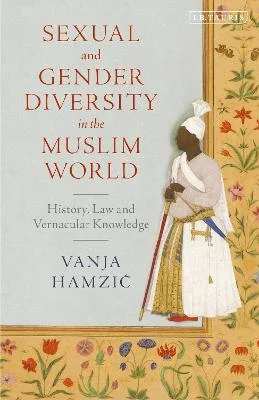
Description
By (author) Hamzic Vanja
Short /annotation:
Unique look at sexuality and gender in the context of historical and contemporary Muslim societies
:
Discrimination on the grounds of sexual orientation or gender identity is forbidden in contemporary international human rights law, yet in many interpretations of Islamic law, this is seen to contradict the tenets of Islam. Vanja Hamzic here offers a path-breaking historical and anthropological analysis of the discourses on sexual and gender diversity in the Muslim world. The first of its kind, the book sheds new light on the understanding of diversity and resistance to hegemonic visions of the self in Muslim societies. Combining first-hand ethnographic accounts of Muslims in contemporary Pakistan including the hijra community whose pluralist sexual and gender experience defy the disciplinary gaze of both international and state law with new archival research, this book provides a unique mapping of Islamic jurisprudence, court practice and social developments in the Muslim world. Hamzic provides a comprehensive look at the ways in which sexually diverse and gender-variant Muslims are seen, and see themselves, within the context of the Islamic legal tradition.
Review quote:
Human rights law speaks volumes to Islamic law on behalf of sexual minorities in the Muslim world, but this book, based on extensive fieldwork in Lahore, Pakistan, turns the tables. It plumbs Islamic Law as a source for understanding, celebrating, protecting and learning from sexually diverse and gender-variant Muslims today and historically – and for enriching a human rights vocabulary on sexual diversity that pales by comparison with Vanja Hamzic’s rich ethnography and his genealogy of treasured sexual minorities in Islamic law from the early umma to the never-quite-post colonial present.
Review quote:
Vanja Hamzic’s book is one of those rare endeavors that gather up disparate worlds of human action to present a synthesis that jolts us out of our accustomed ways of thinking. Undertaking a masterful journey through history, law and ethnography, this book reflects on gender and sexual diversity in the Muslim world – both past and present. How does the salvational agency of the law discipline this diversity as it reorients subjectivities and lifeworlds? How do we square sexual and gender difference with equality? These are some of the probing questions this book cogently asks.
Biographical note:
Vanja Hamzic is Senior Lecturer in Legal History and Legal Anthropology at SOAS, University of London. He has held numerous prestigious research positions, including the residential membership in the School of Social Science of the Institute for Advanced Study at Princeton. His main body of work interrogates historical and present-day formations of gender and sexuality in various Islamicate societies of South Asia, Southeast Asia and West Africa. He is co-author, with Ziba Mir-Hosseini, of Control and Sexuality: The Revival of Zina Laws in Muslim Contexts (2010).
Promotional headline:
Unique look at sexuality and gender in the context of historical and contemporary Muslim societies
for collection:
South Asia is home to one of the largest Muslim populations in the world. From early Muslim dynastic rulers to the Mughals, Colonial Rule, Partition and beyond, Islam has played a pivotal part in influencing the history of the region. As South Asia rapidly develops, to what extent will its Islamic heritage and culture influence the region in future? This unique new series opens up innovative avenues for research and debate in exploring the politics, heritage and future of Islamic South Asia. Located thematically in South Asia, and focusing on pluralistic Islamic formations andpractices, Islamic South Asia reflects how the mutually intertwined past an


Reviews
There are no reviews yet.