
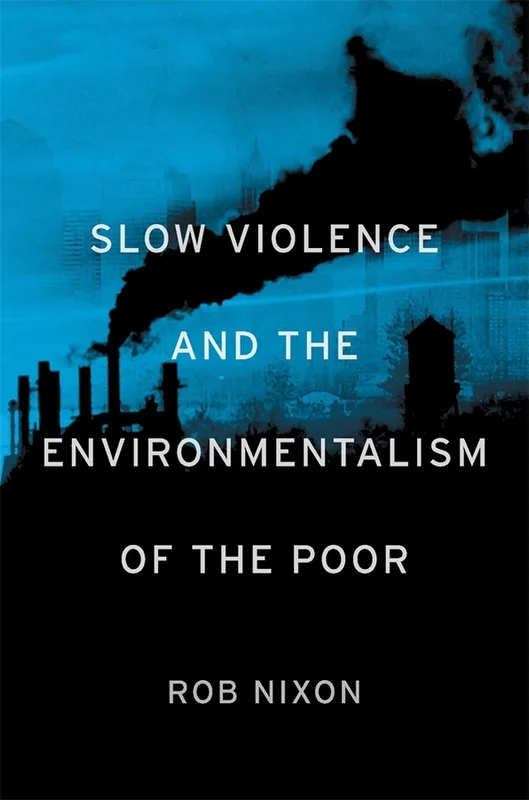
Description
By (author) Nixon Rob
Short /annotation:
“Slow violence” from climate change, toxic drift, deforestation, oil spills, and the environmental aftermath of war occurs gradually and often invisibly. Rob Nixon focuses on the inattention we have paid to the lethality of many environmental crises, in contrast with the sensational, spectacle-driven messaging that impels public activism today.
:
“Groundbreaking in its call to reconsider our approach to the slow rhythm of time in the very concrete realms of environmental health and social justice.” —Wold Literature Today
The violence wrought by climate change, toxic drift, deforestation, oil spills, and the environmental aftermath of war takes place gradually and often invisibly. Using the innovative concept of “slow violence” to describe these threats, Rob Nixon focuses on the inattention we have paid to the attritional lethality of many environmental crises, in contrast with the sensational, spectacle-driven messaging that impels public activism today. Slow violence, because it is so readily ignored by a hard-charging capitalism, exacerbates the vulnerability of ecosystems and of people who are poor, disempowered, and often involuntarily displaced, while fueling social conflicts that arise from desperation as life-sustaining conditions erode.
In a book of extraordinary scope, Nixon examines a cluster of writer-activists affiliated with the environmentalism of the poor in the global South. By approaching environmental justice literature from this transnational perspective, he exposes the limitations of the national and local frames that dominate environmental writing. And by skillfully illuminating the strategies these writer-activists deploy to give dramatic visibility to environmental emergencies, Nixon invites his readers to engage with some of the most pressing challenges of our time.
Review quote:
Slow Violence is an important contribution to the growing field of ecocriticism… Nixon further broadens the scope of ecocriticism by bringing postcolonial studies to the table… Nixon’s Slow Violence is the first book in environmental literary studies to explore the connection between natural resource extraction and petro-imperialism… Slow Violence eschews dense prose and indecipherable academic jargon for the rigorous, clear writing of someone with the mind of a critic and the heart of a humanist. From now on, thanks to this book, no discussion on environmentalism would be complete without taking slow violence into account.
Review quote:
Slow Violence will, I think, become what it aspires to be: a foundational text of an ‘environmental humanities’ that also conjugates ecologism, anti-imperialism and anti-capitalism, to be achieved through a ‘creative alliance’ between environmental and postcolonial studies, two protagonists accustomed to ignoring each other.
Review quote:
The previously published sections of Slow Violence and the Environmentalism of the Poor placed Nixon in the vanguard of a movement to make ecocriticism and environmentalism more attuned to imperialism (past and present), to related global injustices, and to postcolonial literatures. The book itself ensures his position among the most prominent voices of what has come to be known as postcolonial ecocriticism, part of a larger effort to open ‘up paths, inside the academy and beyond, to more diverse accommodations of what counts as environmental.’ Yet, even by the standards of this field, Slow Violence is impressively interdisciplinary and activist. Not only does it draw extensively on environmental history, the social sciences, and various kinds of journalism, it also offers keen historical and sociological insight into pressing contemporary issues. Slow Violence will be engaging and accessible to all those working in academia a




Reviews
There are no reviews yet.