
Description
Edited by Stronge Susan
Short /annotation:
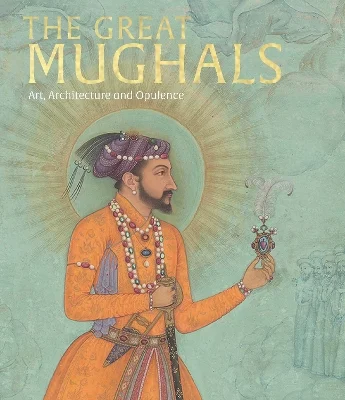
The Great Mughals presents, for the first time the opulent, internationalist culture of Mughal Hindustan in the age of its greatest emperors: Akbar (r.1556-1605), Jahangir (r.1605-1627) and Shah Jahan (r. 1628-1658).
:
Susan Stronge brings together a beautifully curated treasury of the greatest wonders to survive from on of the most elegant and refined courts in world history. This, truly, is the art of a golden age. William Dalrymple
The Great Mughals presents, for the first time the opulent, internationalist culture of Mughal Hindustan in the age of its greatest emperors: Akbar (r.1556-1605), Jahangir (r.1605-1627) and Shah Jahan (r. 1628-1658). Providing a compelling new narrative to describe the origins of Moghul art, it explores how a huge Iranian influence permeated the sophisticated craft traditions of the Indian subcontinent to create a distinctively Mughal court are included: from contemporary portraits to jewelled gold vessels and carpets. In chapters that conjure the unique dynamics of each reign, essays with historical sweep combine with texts focused on important objects to tell unexpected stories about a dynasty perhaps best known for commissioning the Taj Mahal.
Table of contents:
Preface, Susan Stronge — Introduction, Rajeev Kinra — THE REIGN OF AKBAR (1556-1605) — The reign of Akbar and the creation of a new art, Susan Stronge — The bronze and copper wares of Mughal Hindustan, Assadullah Souren Melikian-Chirvani — The Portuguese and the global gem trade, Hugo Crespo — A V&A Koran the imperial Mughal collection, Ursula Sims-Williams — The Bargello mother-of-pearl shield and its European reception, Adriana Concin — THE REIGN OF JAHANGIR (1605-27) and Nur Jahan — The reign of Jahangir: The treasury of the world, Susan Stronge — Sa”ida-ye Gilani and the jades of Hindustan, Assadullah Souren Melikian-Chirvani — Mughal Carpets, Steven Cohen — A Sufi ode from a vanished Lahore mosque, 1615-16, Assadullah Souren Melikian-Chirvani– All that glitters: An early Mughal Zardozi canopy — The making of the V&A Mughal coat, Avalon Fotheringham — The zodiacal and portrait coins of Emperor Jahangir: Art and poetry in circulation, Shailendra Bhandare — THE REIGN OF SHAH JAHAN (1628-58) — The reign of Shah Jahan: the Garden of Paradise, Susan Stronge — Mughal Textiles and Dress, Sylvia Houghteling — Plumes, pets and pishkesh: Exotic animals and the Great Mughals, Peter Jarman — The ”Fire-Bearing” sword of Emperor Jahangir: A Mughal dynastic heirloom, Assadullah Souren Melikian-Chirvani — Chinese porcelain in the Mughal treasury, Ricarda Brosch — Architectural drawings, Divia Patel — Notes — Bibliography — Author biographies — Acknowledgements — Picture credits — Index
Review quote:
”…as much a work of scholarship as an art object worthy ofany collection dedicated to the marvels of world history.” Artlyst, 7 November2024
‘Sometimes the magnificence of a book takes away one’sbreath: The Great Mughals: Art, Architecture and Opulence – is one’ MargaretGraham, Frost Magazine, December 8th 2024
From the ramparts of the Agrafort, the Mughal Emperors once ruled over the greatest and most populous of allMuslim Empires. The Mughals claimed the loyalty of some 100 million subjects-five times the number of those ruled by their Ottoman rivals, and many timesthat ruled by their westerly neighbours, the Safavids of Isfahan.
Perhaps more than any otherIslamic dynasty, the Mughals made their love of architecture and the arts acentral part of their identity as rulers, believing that artists and architectswere, in the words of the Emperor Humayun, “the delight of all the world.”
In this magnificent catalogueof her astonishing V&A show, Susan Stronge brings together a beautifullycurated treasury of the greatest wonders

Reviews
There are no reviews yet.